Timelapse: Creating a Moving Photograph
Thursday, February 9, 2012 at 11:00am PST / 2:00pm EST
FREE Webinar—Register here: https://www1.gotomeeting.com/register/473140720

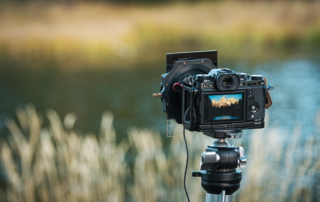
Join me this Thursday in a webinar with onOne Software as I walk through the steps of planning, shooting and editing still images to create timelapse movies. I’ll go through the steps I use in Lightroom, how to sequence the images together with several different types of software and also a few ways to stylize your videos with Perfect Effects and Focal Point software.

I’m really excited about this webinar and hope that you’ll join me! There’s more info over at the onOne Software website, and you can register for the webinar on the link at the top of this post. Hope to see you there!

Here’s a link to the recorded webinar over on YouTube.


As a food photographer there are times when I need to get in close to my subject. Usually this isn’t a problem especially when I’m photographing something that is “normal” in size, like a bowl of pasta or a plate of food. However there are, on occasion, times when I’m photographing something small and my usual lens (the Canon 70-200mm f/4L IS) just can’t focus in tight enough. It’s times like these when I need a macro lens.

The thing is, I don’t own a macro lens, and I can’t remember the last time I had ever used one. In my opinion it’s a misconception that you need a macro to shoot food, since there’s usually no need to get in so close to a plate of food to photograph teeny-tiny details (usually at the expense of not being able to tell what is being photographed). But when you have a very small subject, and you want to get in tight on that subject, then a macro lens is the only way to go.

I had a few setups I wanted to shoot in which I needed a macro lens, and BorrowLenses was kind enough to send me a few lenses to try out. There were two I had my eye on: the Zeiss 100mm macro, and the Canon 180mm macro. I wanted to try the Zeiss because, well, it’s a Zeiss … and that it was 100mm. I chose the Canon 180mm because with my 70-200m I’m usually always set at 200mm, so I figured that would be a familiar focal length. I assumed that would be the one I liked best.

When I got the lenses, I set up my shot with the ring (in the photo above), and the first one I tried was the 180mm. I hadn’t heard too many good things about the lens from a few different people, mostly along the lines of “it has too much macro”, but I wanted to see for myself. And … they were right. When I set up the ring in the shot above with the 180mm it was sooooo compressed and way zoomed in to the ring that I couldn’t get very much else in the frame. I wanted to have some of the glass and bubbles in the shot, but there wasn’t much else I could fit without backing up, and I didn’t want to be too far from my set. My initial thought of it being the one I would like best (and more likely to buy over the 100mm) was wrong.

So I switched to the Zeiss 100mm, completed my shoot and was pretty happy with the results. The Zeiss is pretty expensive, so I might not end up with that one down the road and may have to give the Canon 100mm macro a try before I dive into any big purchases. The key is that I now know what works for my photography to get the results I want.

The whole point I’m trying to get across is that if you want to buy new gear, that’s great! Just make sure you need it, first. Consider BorrowLenses, for lens rentals, or just try out gear from a willing friend. When I first started into Photography I bought so much more gear than I ever needed … partly because I didn’t know what I wanted, and also because I didn’t realize what I got wouldn’t be what I wanted. I get emails all the time asking “which lens/camera/etc. should I buy”, and my answer is always to rent first. You can only tell so much from other people’s photos, or even just trying the lens in the store. You need to be in real-world situations with gear to know if it is what will work for your photography.


Final image (on right): Canon 5DMkII, Canon 70-200mm f/4L IS lens, 1/8 sec at f/8, ISO 100

I recently photographed a blender filled with fruit for my stock portfolio, and the setup was unique to my usual food photographs so I thought I’d share it here on my blog. I almost always use diffused daylight for my food images (with a few exceptions) so I wanted to go with that and, even though this was a setup that would have worked just as well with strobes, I thought I’d give it a try with window-light to see what I could come up with.

When you photograph glass, or any reflective surface, you need to watch out for stray reflections. If you’re in a room with colored walls and the walls are showing in your surface then you’ll see that color in your image, just as I did with the gold-colored stripe at the bottom of the image, which is a combination reflection of the wooden surface and gold reflector I used for fill. You also want to try to add light to the sides of the glass to outline it so it doesn’t “disappear” into the background, especially if you don’t have anything inside of the glass when you photograph it.

I also wanted a backdrop that was simple, and neutral, so I added a piece of white foam board at an angle directly behind the blender. My focal length was long (180mm) so that at ƒ/8 the DOF was shallow enough so that any imperfection in the board blurred away, and it add a nice gradient to the background as well (I didn’t add any vignette to the final image since it would have introduced banding in the corners).

Here are all of the elements to my setup:

  • Camera: Canon 5DMkII
  • Lens: Canon 70-200mm ƒ/4L IS
  • Tripod and head with Custom Bracket
  • Lighting: Back-lit with diffused window light (North-facing)
  • Four pieces white foam board
  • Small gold reflector for fill light in the front


In this video I demonstrate how to add a vignette to a photograph using Adobe Photoshop
Click here to view this video on YouTube.


Beautiful Cliché

Canon 5D Mark II, Canon 70-200mm f/4L IS lens, 20 sec at f/16, ISO 100

I had a nice, early morning today. I got up before the sunrise to meet up with my friend Jacob Lucas at Kerry Park in Seattle to do a sunrise shoot of the city. I’d heard of this spot several times in the few months since I moved hear and this is the first time I made it up. As you would expect it’s not always clear skies in this part of the country, so when the opportunity presents itself it’s difficult to say no. It’s always a wonderful thing when Mount Rainier is visible in the distance. :)

I got to the park earlier than I had planned, which was good because I got this “still dark” photograph, and I ended up liking it much better than my later shots when the sky started to get bright and colorful. I was also running on “battery fumes” because I forgot to throw a fully-charged battery in my camera bag and it was flashing red/empty at me by the time I called it quits. Thankfully a nice Canon photographer nearby let me use one of his spares for a bit so I didn’t feel too rushed … I like nice people. :)

I don’t expect to live in Seattle forever, so I’m trying to get some of the beautiful cliché scenes while I’m here and it’s easy transit (I live about a stone’s throw from the Space Needle). I’m sure this won’t be the last time I head up to Kerry Park, either. I may test the waters at sunset to see what the light is like, and I’m sure I’ll eventually head up and shoot some timelapse footage as well.


Working with What You Love

Canon 5D Mark II, Canon TS-E 24mm ƒ/3.5L II lens, 55 sec at ƒ/16, ISO 100

One thing that always gets me revved about photography and excited to create photographs is reading about light. Light its, after all, the only reason that photography exists. I’ve been wanting to shoot some food photographs that have a lot of glass-work in them, or just with interesting lighting setups, so I decided to dust off my copy of Light, Science & Magic (here’s the Amazon link to the book)and check out the chapter on lighting glass. (This book, BTW, is THE BEST resource for photographic lighting … they cover everything, all from a very scientific perspective.) While reading through the intro something caught my attention and I felt was worth a mention here (bold-face type added by me for emphasis):

Successful photographers depend on the photographer more than the equipment. Inexperienced photographers work best with the camera with which they are familiar. Experienced photographers work best with the camera they like. These human factors sometimes have more to do with the success of a photograph than the purely technical principles.

You hear it all the time, that it’s not about gear as much as it’s about vision, or skill, or maybe even just a bit of planning. But those words above summed it up so much better than I’ve ever seen. It’s a no-brainer, really—if you are in love with the camera you are using then you will be more passionate about your work and you will make better photographs. It doesn’t matter if it’s a brand new Canon 1DX, a Nikon D4, a Fuji x100 or an old Polaroid. Use what you enjoy working with, or what you’re most familiar with, and you’ll find you have better success with your photographs.


In this video I demonstrate how to add texture to a photograph using Adobe Photoshop
Click here to view this video on YouTube.


Annie Leibovitz at The Elliot Bay Book Company | Photo by Jacob Lucas

Yesterday I had the opportunity to meet Annie Leibovitz at a local book signing in Seattle. She gave a quick talk and read from her new book, Pilgrimage (Amazon link), and answered a few questions from the audience. She is such an amazing photographer, and I also discovered that she’s an extremely warm, genuine and friendly person. I purchased her new book, Pilgrimage, and had it personalized and signed … and I even managed to sneak behind her table and get a photo taken with her.

This was such a great experience, and I’m truly inspired and motivated to get out and create. Thanks, Annie!


Peachpit Photo Club:
Tuesday, December 13th at 5:00 PM (PST)

Register here: http://www.peachpit.com/promotions/promotion.aspx?promo=137633

In this presentation I’ll be discussing food photography and my book Food Photography: From Snapshots to Great Shots (here’s the link on Amazon). I’ll discuss tips on photography, styling and even some basic photographic concepts which are commonly used with food. If you’re interested in food photography, this is definitely for you!

This webinar is free and limited to 200 participants, so register early to make sure you get a seat.

onOne Presents:
Wednesday, December 21st at 11:00 AM (PST)

Register here: https://www1.gotomeeting.com/register/969105848

As one of the newest partners with onOne Software I’m making my “webinar debut” and will be giving a presentation on my photography, talk about my business (mostly stock photography) and also about my recent travels to Vietnam. I’ll share a lot of photos and answer questions along the way. I’m really excited about this, so I hope you’ll join me!

Registration is free and there is no limit for participants.


Hoi An, Vietnam

Camera: iPhone 4

I’m currently in Hoi An, Vietnam and have been in Vietnam for one week. So far I’ve traveled to Ho Chi Minh City, the Mekong Delta, Nha Trang and I have a few days left in Hoi An before heading up North. I still have about two weeks left, and so far I’ve gotten some great photos and had many unforgettable experiences.

When I told many of my photographer friends I was headed here, they all told me they were jealous … and now I know why. This place is a photographer’s paradise. So much activity, the people are gorgeous and friendly, and the scenery is amazing. I’ve actually been enjoying the “mostly cloudy” weather, with a bit of rain, and a few days of sunshine … my skin doesn’t like the bright sunlight, and it allows me to photograph in the middle of the day in areas that would normally be reserved for the softer morning or evening light.

I photographed the above scene off a street in Hoi An (this shot was with my iPhone). I got up very early, about 5:00 am, to walk down and see the hustle and bustle of the fish market. The nice thing about this time of day is that it wasn’t crowded with tourists (I only saw a few other “westerners”, and they both had cameras like me) and the streets away from the market were fairly empty and free of people in general. I doubt that this scene would have looked the same if I had waited a few hours to head out with my camera.

To follow more of my travels in Vietnam, take a look at my Google+ page. I’ve been updating it daily with the places I’ve traveled to and some of my fun experiences.